
Contact Us
How to Use the Repair Window: A Simple Plan for Math
How to Use the Repair Window:
A Simple Plan for Summer Math
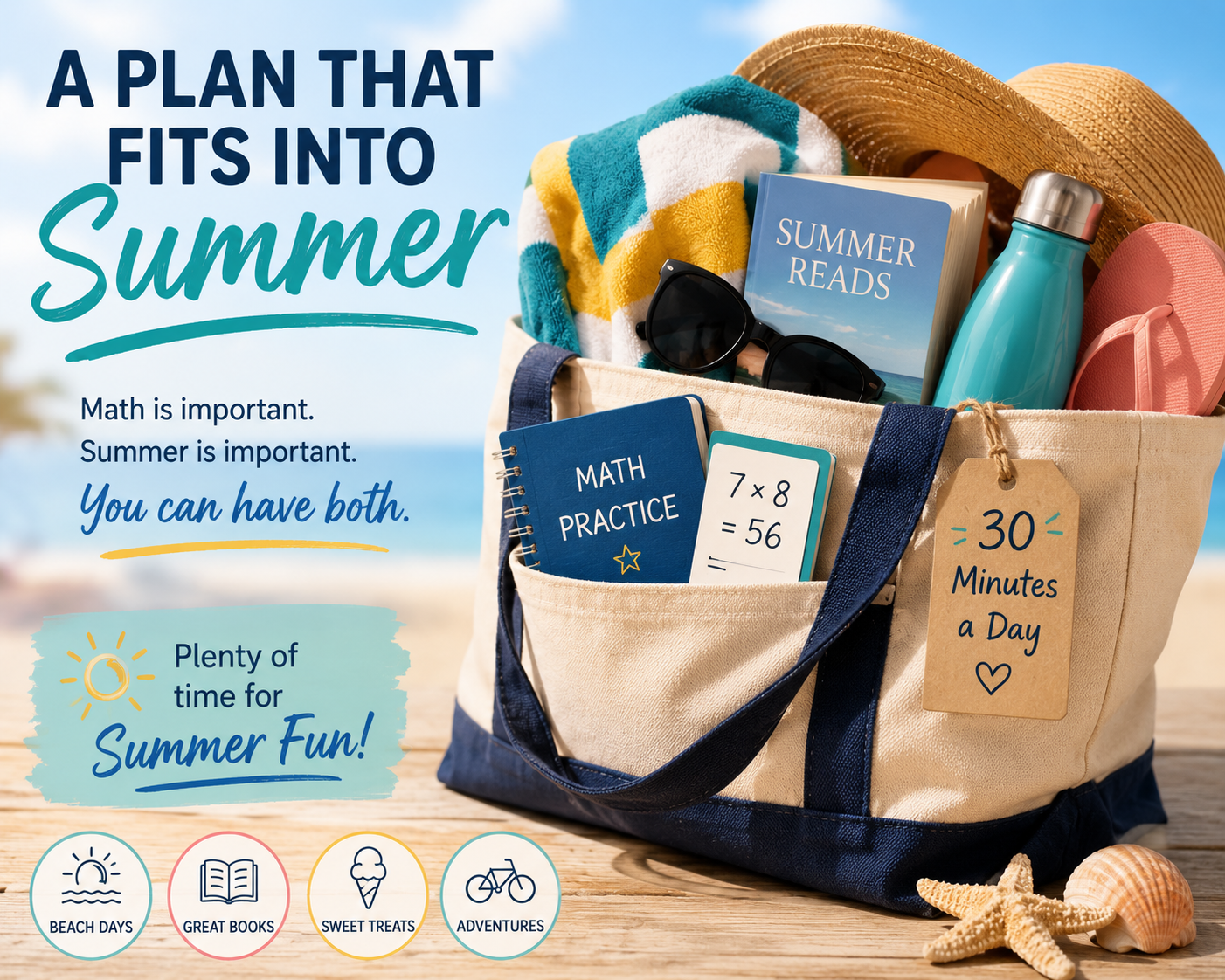
A Plan That Fits Into Summer
One of the biggest concerns parents have about summer math is simple:
Will this take over our summer?
The answer is no.
The goal of the Repair Window is not to recreate school at home. Summer should still include vacations, pool days, camps, family activities, and time to relax.
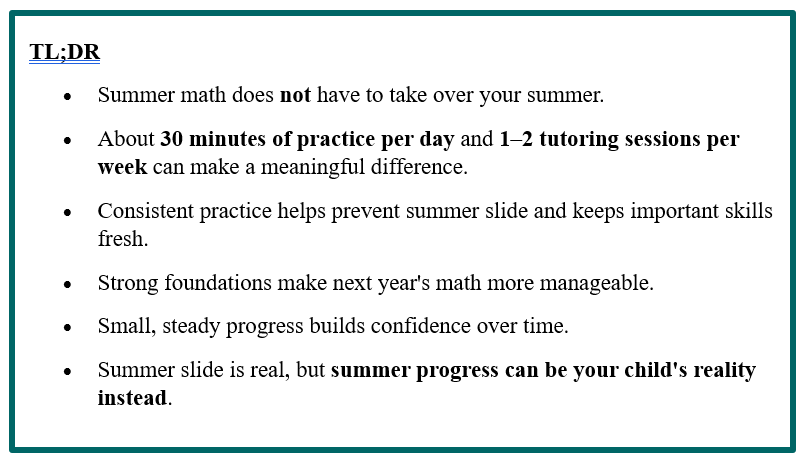
What students need is a small amount of consistent effort. For many families, that looks like about 30 minutes of practice each day and one or two tutoring sessions per week. The rest of the day is still available for everything else that makes summer special.
Think of it this way: just as a young athlete might continue practicing during the off-season, students benefit from keeping their math skills active while school is out. A little consistency now can make a big difference when the next school year begins.
Summer should still feel like summer.
The goal is simply to make room for progress along the way.
What Real Summer Progress Looks Like
When parents hear the phrase "catch up in math," they often imagine hours of worksheets or an overwhelming amount of work.
In reality, progress usually happens through small, consistent steps.
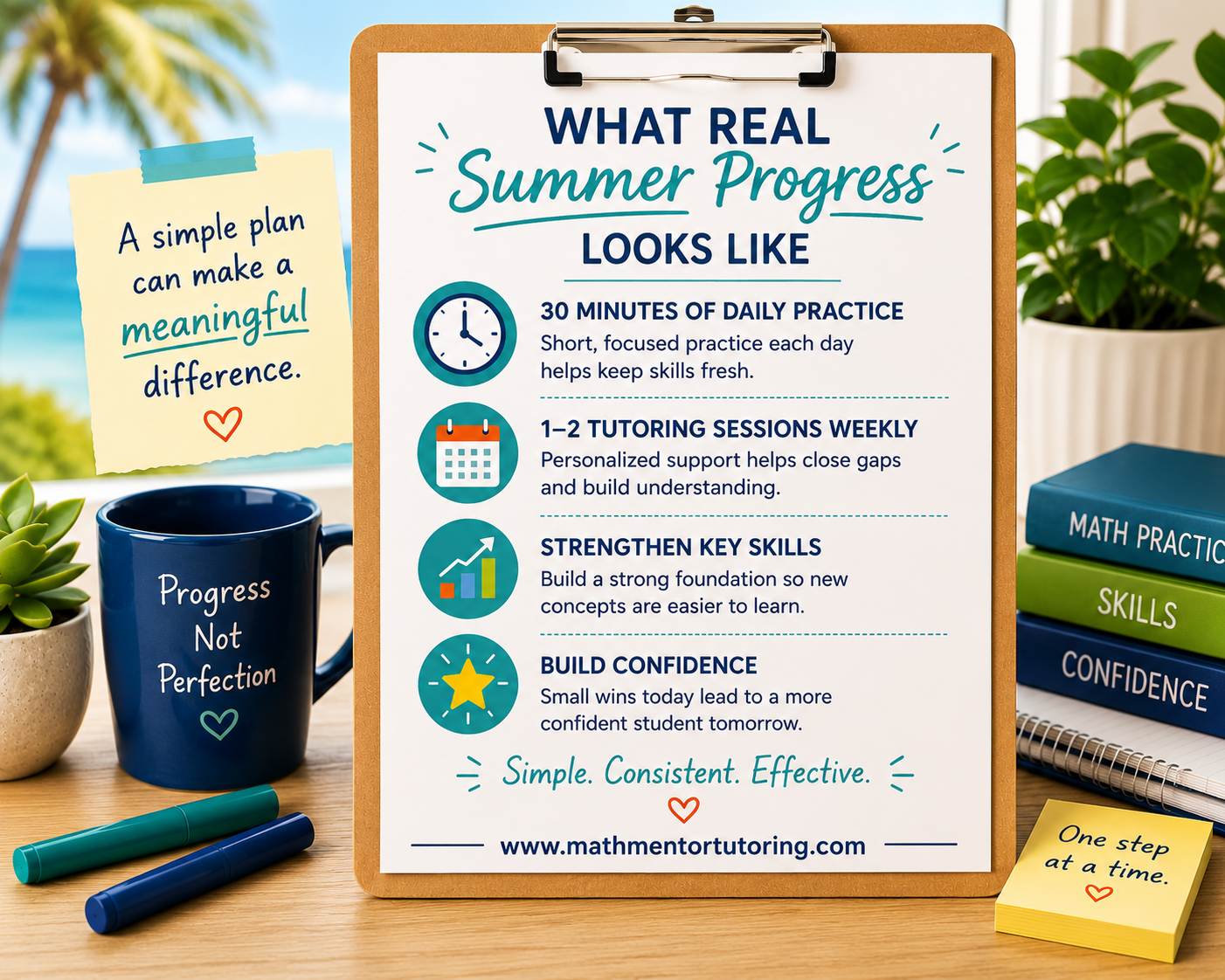
A simple summer routine might include:
About 30 minutes of focused practice each day
One or two tutoring sessions per week
Review of the skills that need the most attention
Regular opportunities to apply and reinforce those skills
In my work with middle school and early high school students, I often see the strongest summer progress when families keep the plan simple and consistent. Students are far more likely to stick with a manageable routine than an ambitious plan that quickly becomes overwhelming.
The daily practice helps strengthen memory and retention. Tutoring provides instruction, feedback, and guidance. Together, they create momentum.
The goal is not perfection. The goal is steady, meaningful progress that helps students feel more prepared and confident when the new school year begins.
Why Summer Matters More Than Most People Realize
Summer has a way of passing quickly. One day the school year ends, and before you know it, back-to-school supplies are lining the store shelves.
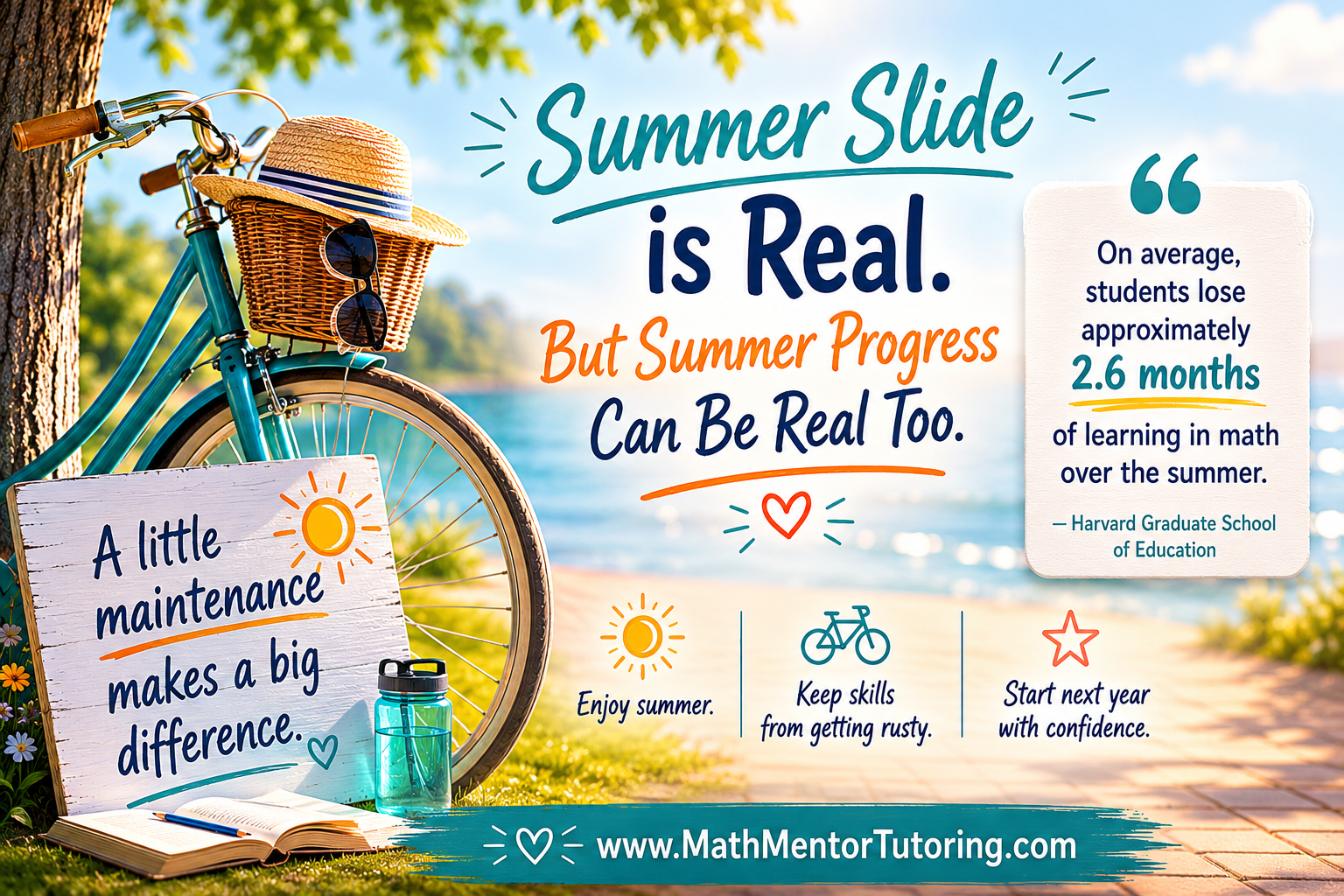
Unfortunately, learning does not stand still during those months. Without regular practice, many students experience what educators call summer slide, a gradual loss of skills and knowledge that can make the start of the new school year more challenging.
Research highlighted by the Harvard Graduate School of Education found that students lose significant ground in math during the summer months. In fact, the article notes that,
"On average, students lose approximately 2.6 months of learning in math over the summer."
This is one reason educators encourage students to continue practicing important skills, even while enjoying a well-deserved break.
This matters because math is built like a staircase. Each new concept depends on skills that came before it. When foundational skills become rusty, the next level of math can feel more frustrating than it needs to be.
If this school year has been challenging, imagine how much harder the next level could feel after losing some of the skills your child worked so hard to learn.
The good news is that summer does not have to be a season of backsliding. With a simple routine and consistent support, students can maintain their progress, strengthen important skills, and begin the new school year with greater confidence.
Summer slide is real.
But summer progress can be real too.
A Stronger Start Is Built During the Summer
You do not need a perfect plan to help your child make progress in math this summer.
You do not need hours of daily work.
You do not need to fix every gap before the first day of school.
What matters most is consistency.
A simple routine of daily practice, regular tutoring, and focused skill development can help your child protect what they have learned, strengthen important foundations, and continue moving forward.
When the new school year begins, your child may not know everything. No student does. But they can begin the year with stronger skills, greater confidence, and a better understanding of the concepts that support future learning.
And if you are still wondering whether your child is simply too far behind to recover, I encourage you to read
"Is It Too Late to Catch Up in Math?"
Many families are surprised to learn how much progress can be made when students receive the right support and consistent practice.
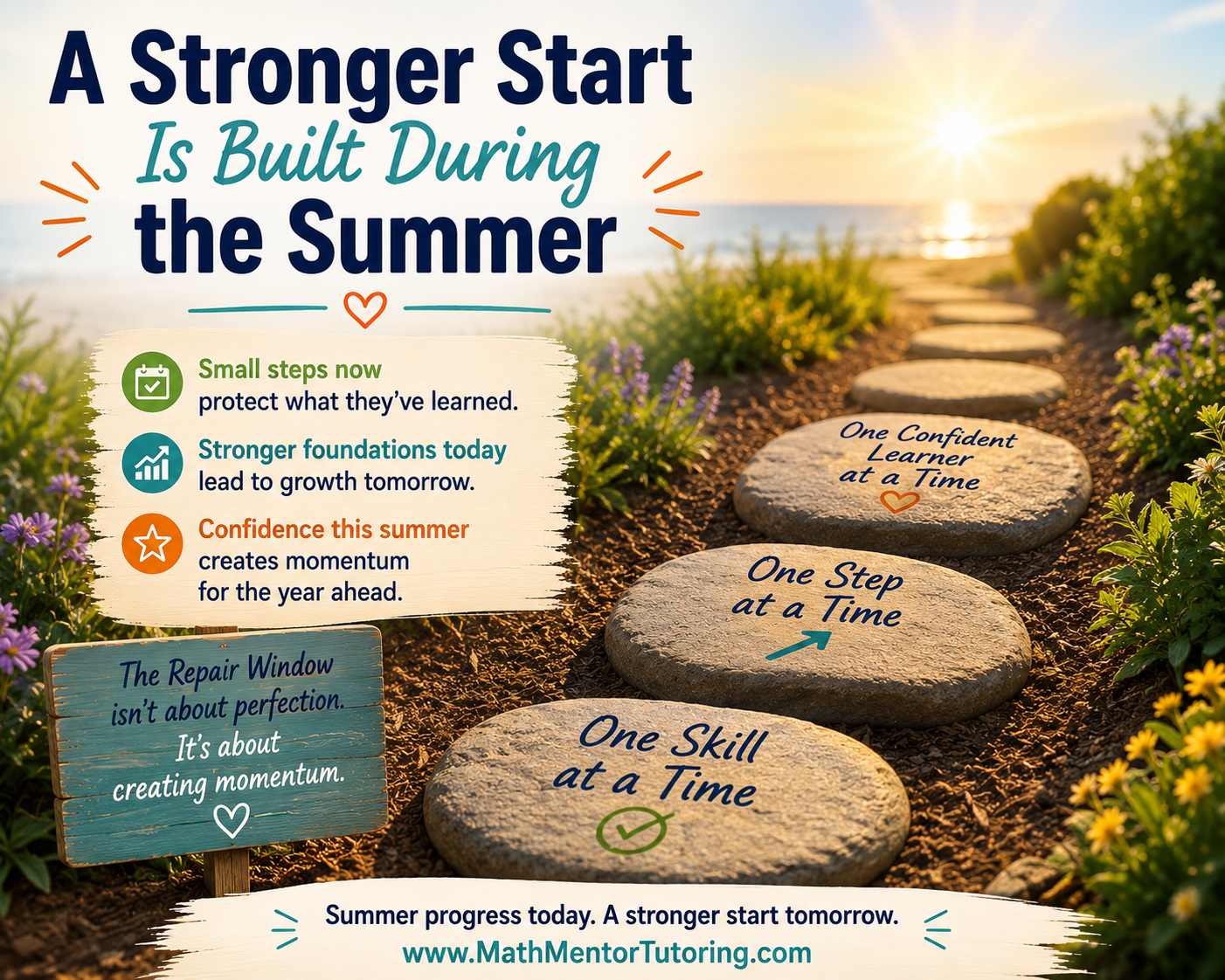
The Repair Window is not about perfection.
It is about creating momentum.
One skill at a time.
One step at a time.
One confident learner at a time.
References
Harvard Graduate School of Education. (2016). Summer Math Loss. Retrieved from:
https://www.gse.harvard.edu/ideas/usable-knowledge/16/06/summer-math-loss
Wondering Whether Now Is the Right Time?
If your child has struggled with math this year, you do not have to figure out the next step alone.
The weeks between school years can be a powerful time to strengthen foundational skills and rebuild confidence before the next level begins. Even small, steady progress during this season can make the start of the new school year feel much more manageable.
If you would like help identifying where your child needs support and creating a plan that fits your family's schedule, I would be glad to talk with you.
Schedule a free consultation to discuss your child's math needs and explore how the Repair Window can be used wisely.

About the Author
Beth Bowen is the founder of Math Mentor Tutoring, where she works with middle school and high school students, grade 6 through Algebra 1, to build strong mathematical foundations and confident reasoning. A former public high school math teacher and longtime homeschool parent, she brings both classroom experience and personal insight to math placement decisions.
Mrs. Beth specializes in Algebra readiness, strategic sequencing, and targeted foundation repair. She is passionate about reducing test anxiety, equipping students with practical learning tools, and helping families build math confidence that lasts beyond a single course or exam.
She believes that lack of knowledge does not mean lack of intelligence, and that with the right structure and support, students can grow into confident, capable math thinkers.
Mrs. Beth serves families in Baldwin County, surrounding areas, and across the nation via both in person and online tutoring.


