
Contact Us
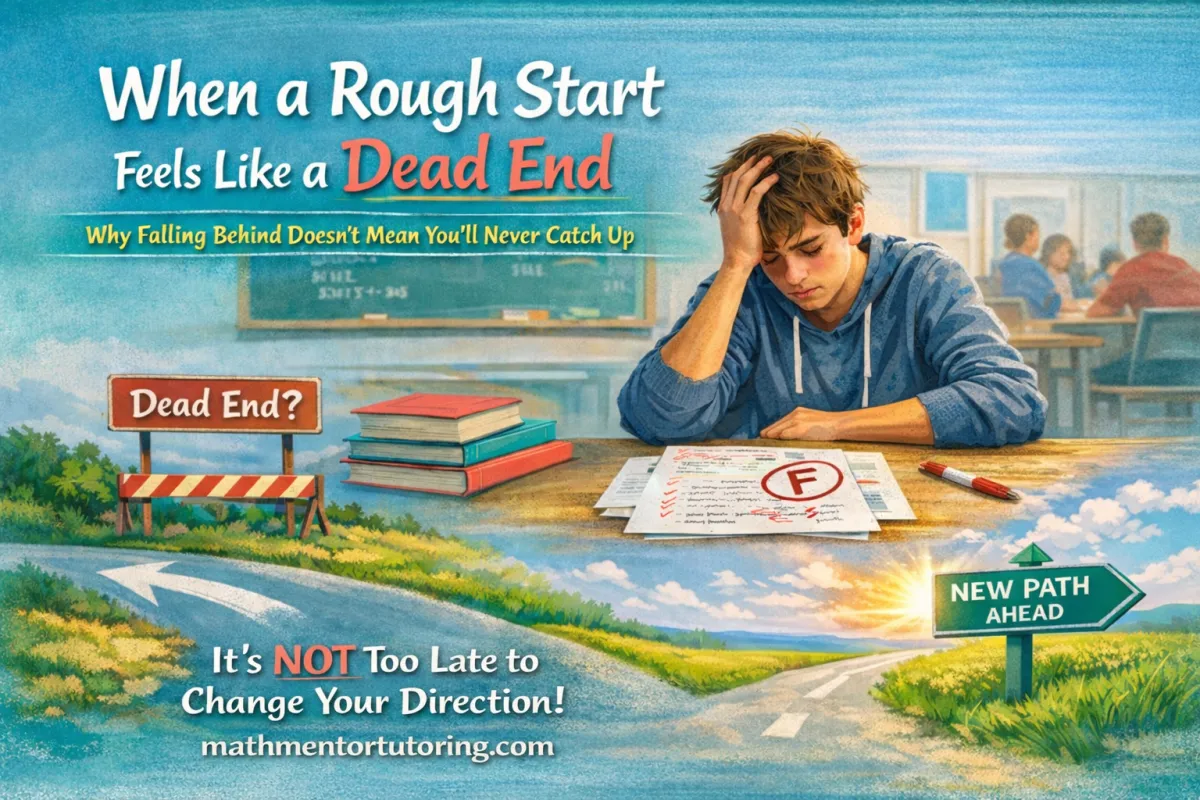
Myth: “If they didn’t get it the first semester, they never will.”


When a Rough Start Feels Like a Dead End
Every year, I meet students who believe a painful story they have been told.
“If you did not get it by now, you never will.”
Sometimes those words are spoken out loud. Other times they are implied through red marked tests, low grades, or a classroom that moves too fast to slow down and fill in the gaps. Either way, the message sticks. And it can quietly convince a capable student that something is wrong with them.
But here is what I know from years of teaching and tutoring math at every level. Struggling in the first semester does not mean a student is doomed. Not even close. In fact, the second half of the year is often when the biggest breakthroughs happen once we slow down, figure out what is missing, and rebuild with purpose.
I have watched students go from confused and discouraged to confident and capable when they finally get the right tools and the right kind of support.
In this post, I want to speak directly to the parents and students who feel discouraged right now. I will explain why this myth is so harmful, show what is really going on when a student falls behind, and share how it is absolutely possible to turn things around and finish the year strong.

The Myth That Holds Students Back
The idea that “If they did not get it the first semester, they never will” is far more common than most people realize.
Sometimes it comes from teachers who are under pressure to keep moving. Sometimes it comes from well meaning adults who feel helpless. And sometimes it starts in a student’s own mind after one too many confusing lessons or disappointing tests.
This belief is rooted in something called a fixed mindset, the idea that ability is something you either have or you do not. But math does not work that way. Math is built in layers. If one layer is missing or shaky, everything on top of it feels harder. That does not mean a student is incapable. It simply means they need to go back and strengthen the foundation.
When students start to believe they are permanently behind, they often stop trying. Parents may begin to lower expectations or feel like getting help would not make a difference. That is when the real damage happens.
This blog post exists to challenge that belief. I have seen something very different happen with real students, many times, and I want you to know that a rough start does not have to define the rest of the year.

A Real Example: From Frustrated to Focused
One of my students came into the school year significantly behind in math. Instead of jumping straight into the current material and hoping for the best, we paused. Together with his parents, we created a plan and built what I call a Math Toolkit.
If you are not familiar with that term, I explain it in detail in my article What is a Math Toolkit and Does My Child Need One?
https://mathmentortutoring.com/blog-564869/b/what-is-a-math-toolkit
In simple terms, a Math Toolkit gives students everything they need in one place so they can think, organize, and actually learn instead of feeling scattered and overwhelmed.
His parents gathered the supplies, printed the pages I sent, and made sure everything was set up at his workspace. With his toolkit ready, we got to work.
We identified the gaps in his understanding and began rebuilding his foundation. We used flashcards for memory, color coded notes for clarity, and slowed down each process so he could understand the why behind every step. We practiced patiently and consistently, without rushing past what he had not truly learned yet.
Week by week, something changed. His confidence grew. His skills improved. And most importantly, he began to see himself as a capable math student.
By the end of the year, he no longer needed tutoring. He moved into the next level and has been doing well ever since.
Not every student reaches that point within a single school year. Some continue tutoring through the summer to fully catch up. Others benefit from longer term support. But in every case, progress happens when students are given the right tools, clear structure, and enough time to rebuild what was missing.

How Tutoring Helps Students Rebuild and Succeed
Catching up is not about working faster. It is about working smarter, with the right kind of support and a clear plan.
Here is what effective tutoring looks like for a student who is behind.
Identify the Gaps
Every student I work with completes a diagnostic assessment that looks across multiple areas of math. This gives me a clear picture of where their strengths are and where the breakdowns are happening. Instead of guessing or just reacting to homework, we can be intentional about what to fix first.
Create a Custom Strategy
No two students learn the same way. Some need visual tools. Others need repetition. Some need step by step explanations. Many need a mix of all three. I tailor my approach to each student so they are not just doing more work, but doing the right kind of work.
Build a Study System
We do not just solve problems. I teach students how to organize their notes, use color coding, create flashcards, and keep everything in one place with their Math Toolkit. These skills help them stay focused and prepared not just for today’s homework, but for every future class.
Encourage Questions and Confidence
Students who are behind often feel embarrassed to ask questions. Tutoring gives them a safe space to say, “I do not get this,” and to hear it explained in a way that finally makes sense.
Adjust the Pace
In a one on one setting, we move as slowly or as quickly as needed. We slow down to fix what is broken and speed up when a student is ready. That flexibility is often what makes the biggest difference.
Some students need short term tutoring to get through a tough stretch. Many benefit from longer term support to fully rebuild their foundation. Either way, the goal is the same. To help students feel capable, prepared, and confident in math.

What Parents Can Do If the First Semester Went Poorly
If your child struggled in math during the first half of the school year, you are not alone, and it is not too late to turn things around. Many capable students fall behind because important pieces of their foundation never fully clicked. Here are some meaningful steps you can take right now.
Gather the right information
You do not need to diagnose your child. I have a tool for that. What helps most is knowing what curriculum they are using, what chapter and lessons they are currently on, and when the next test is scheduled. This allows tutoring to stay aligned with what is happening in class while we rebuild what is missing underneath.
Consider targeted tutoring
A tutor who uses diagnostic tools can identify gaps quickly and create a step by step plan to fix them. This is not about doing more worksheets. It is about repairing the foundation so new material finally makes sense.
Give your child the right tools at home
Students learn better when they have a consistent place to work and the supplies they need. I recommend creating a binder-based Math Toolkit with things like flashcards, colored pens, paper, and reference pages. When everything is in one place, students are less overwhelmed and more able to focus.
Focus on progress, not perfection
Every skill that clicks builds confidence. Even small improvements matter. When students begin to understand what once felt impossible, momentum starts to grow.
The second semester is a chance to reset. Students who struggled early can still finish the year stronger than they started when the right supports are in place.

Final Thoughts: Progress Is Not Always Linear
Learning does not follow a straight line. Sometimes a student struggles for weeks and then suddenly something clicks. Other times, progress comes in small, steady steps that are easy to miss unless someone is paying close attention.
Struggling in the first semester does not mean a student cannot succeed in the second. It simply means they need time, support, and a plan that fits how they learn.
I have watched students go from feeling lost in math to raising their hand with confidence. I have seen students who once froze at the sight of a word problem begin to work through them calmly and correctly. I have even seen students who once needed regular tutoring move forward on their own because they finally had the tools and study habits they needed.
It all starts by letting go of the idea that it is too late. Because it is not.

Ready to Help Your Child Move Forward?
If your child struggled during the first half of the school year, there is still time to turn things around. At Math Mentor Tutoring, I help students rebuild confidence, strengthen their foundations, develop effective study habits, and learn how to manage test anxiety so they can show what they truly know.
If you are wondering whether tutoring would be a good fit for your child, I would love to talk with you.
Visit mathmentortutoring.com to schedule a free consultation.
You are also welcome to explore the free resources on my site, including the Blog and Resources pages, where you will find helpful tools, guides, and articles designed to support students and parents at every stage of the learning process.

About the Author
Beth Bowen is the founder of Math Mentor Tutoring and a certified K–12 math educator with a B.S. in Education. She taught in the public school system for seven years and has homeschooled her own children since 2008. With decades of experience working with students from elementary through college-level math, Beth specializes in helping students rebuild their confidence and foundational skills—even if they’ve struggled for months (or years).
Beth works every day with students who’ve been told—directly or indirectly—that they’re “behind” or “just not good at math.” Her mission is to prove otherwise. Through customized support, structure, and patient guidance, she’s helped students catch up, move into the next level, and even start new school years without needing ongoing tutoring. She also equips students with tools to study effectively, ask questions boldly, and stop fearing math altogether.
You can learn more and explore more resources such as helpful math articles and videos at mathmentortutoring.com.
Connect with Mrs. Beth:
Website: https://mathmentortutoring.com
Facebook: https://www.facebook.com/beth.bowen.9279
LinkedIn: https://www.linkedin.com/in/beth-bowen-math-mentor-tutoring
YouTube: https://www.youtube.com/@MathMentorTutoring
Google Business: https://share.google/RfAMV6jiWSZnRLF02